Portfolio / The Question Machine
2026
The Question Machine: An Interactive Experience in Inquiry and Perspective Taking
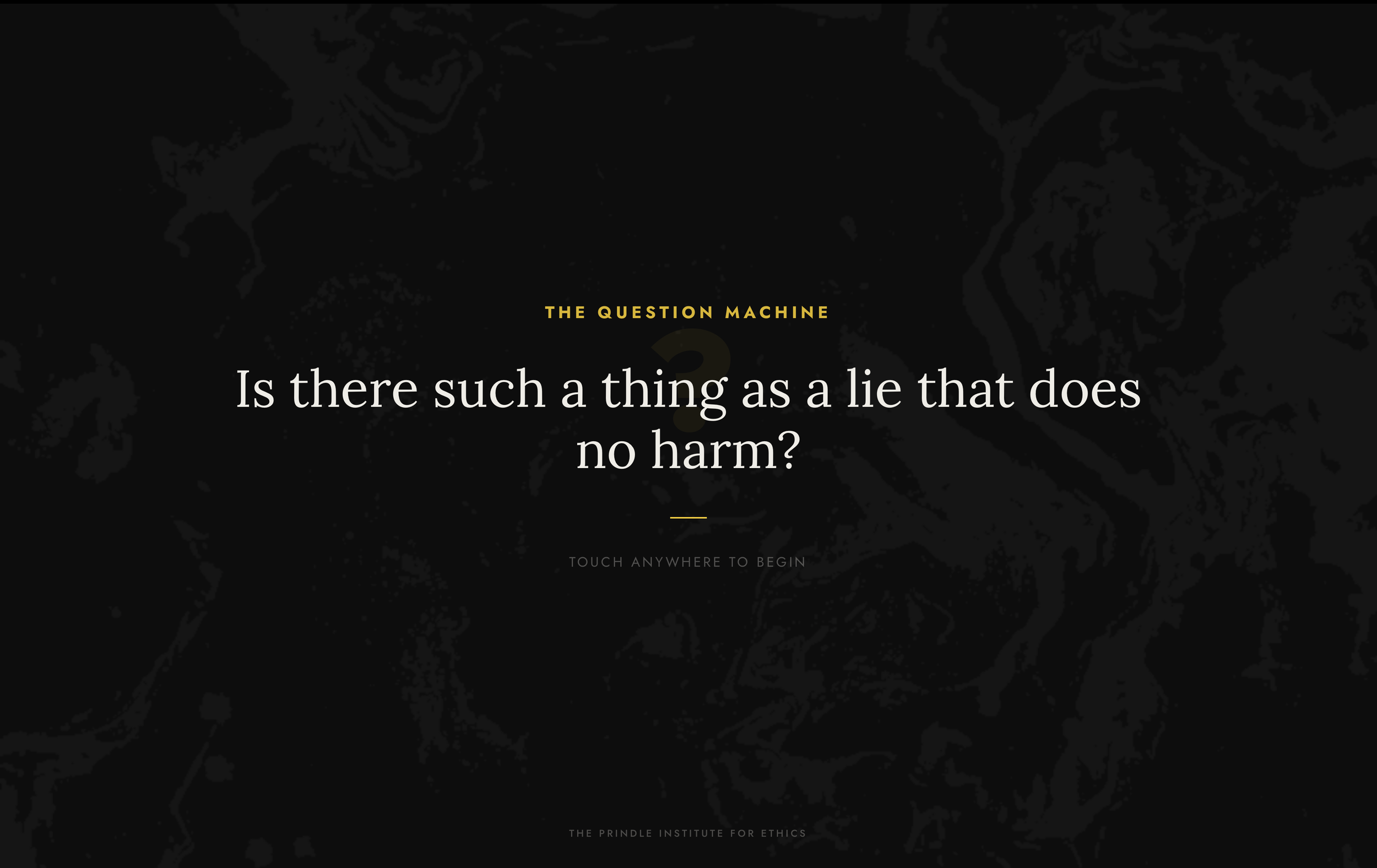
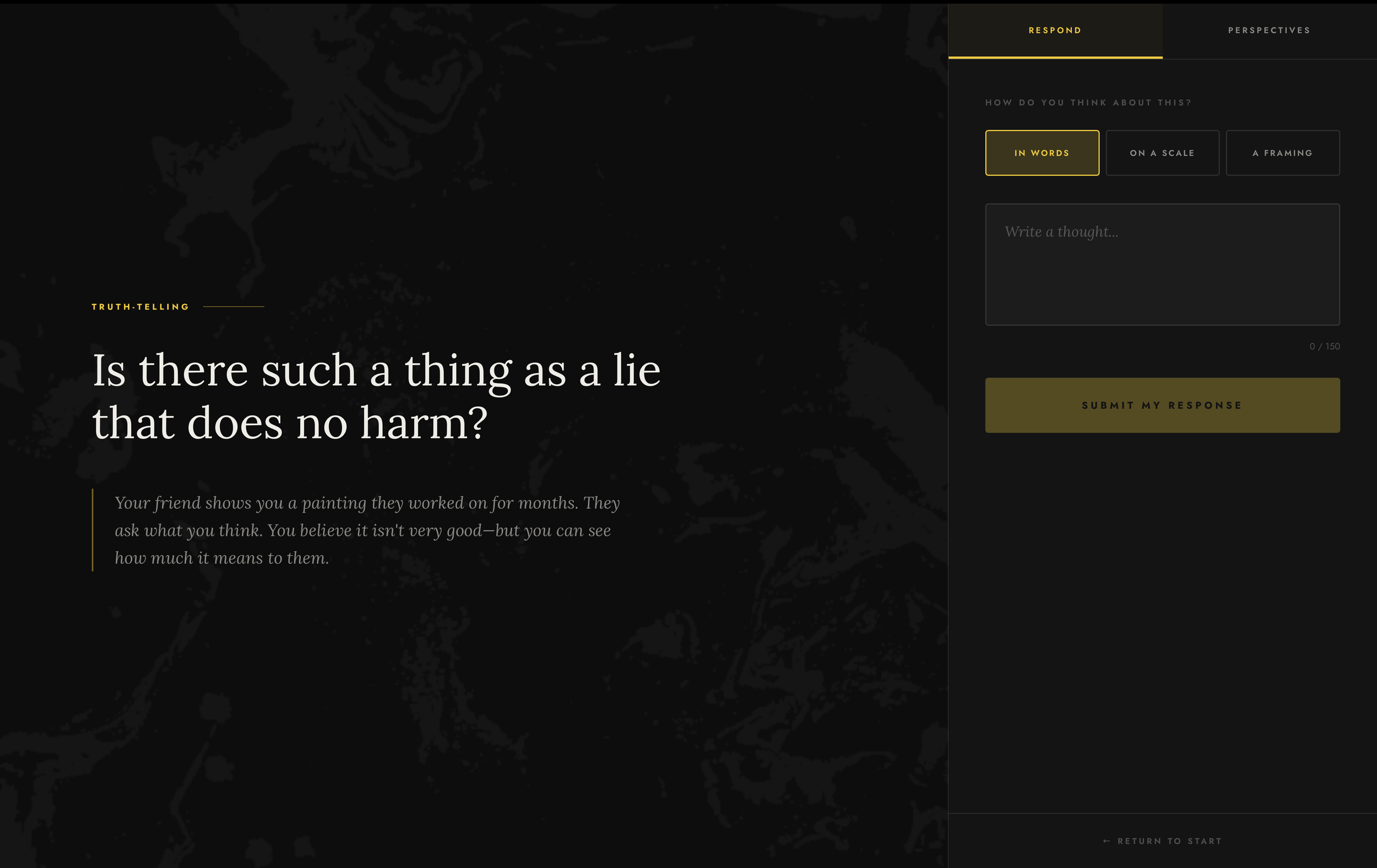
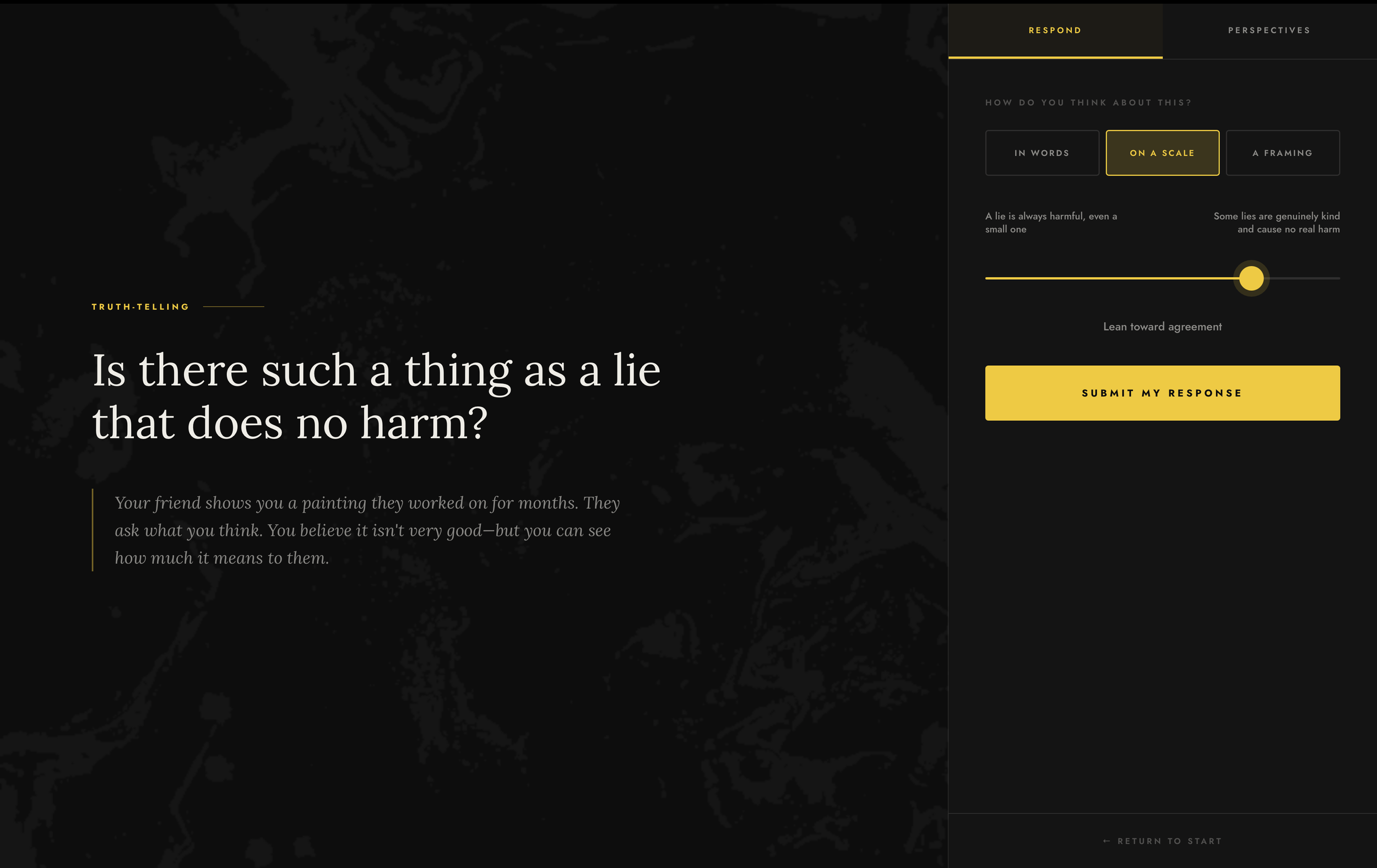
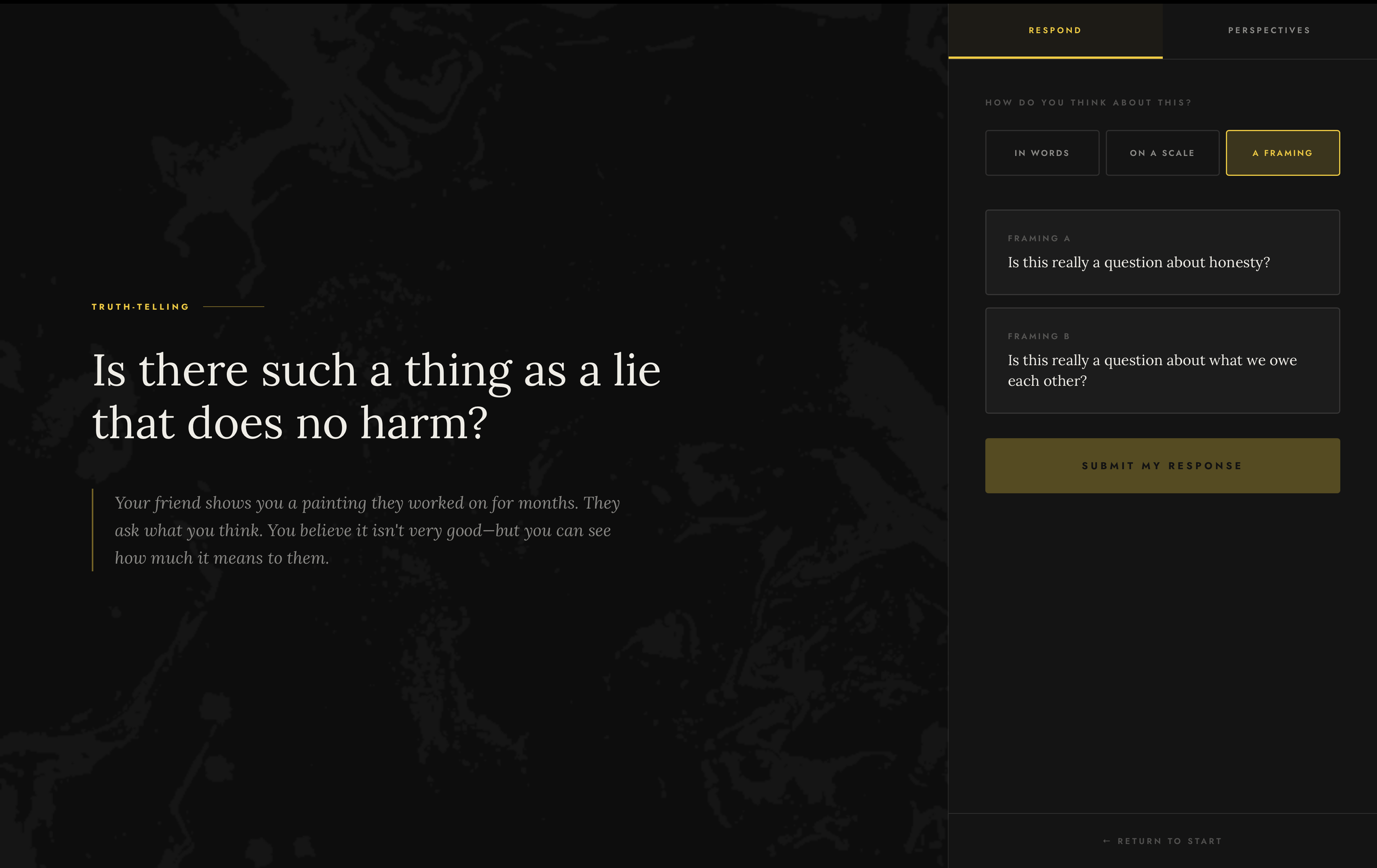
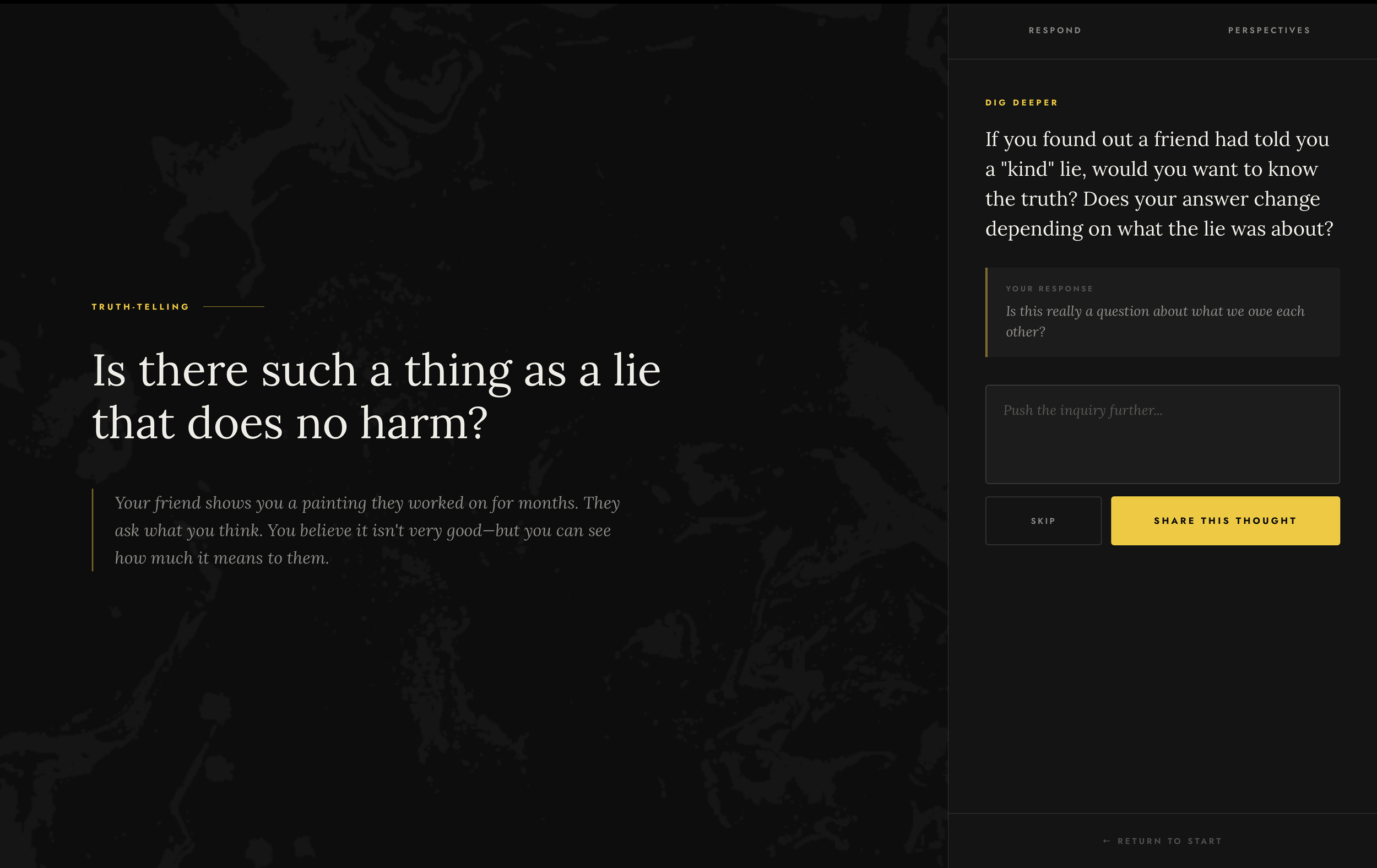
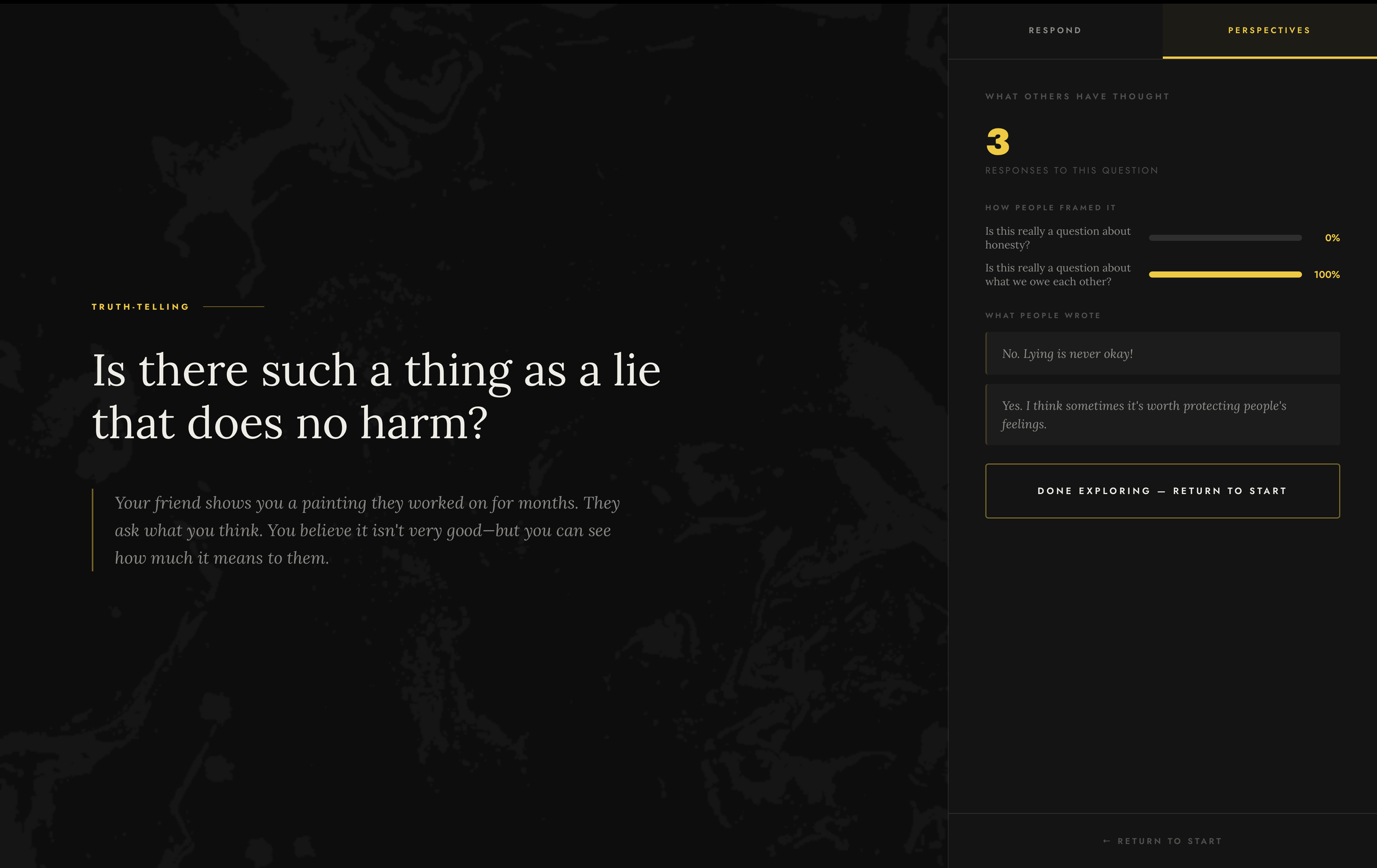
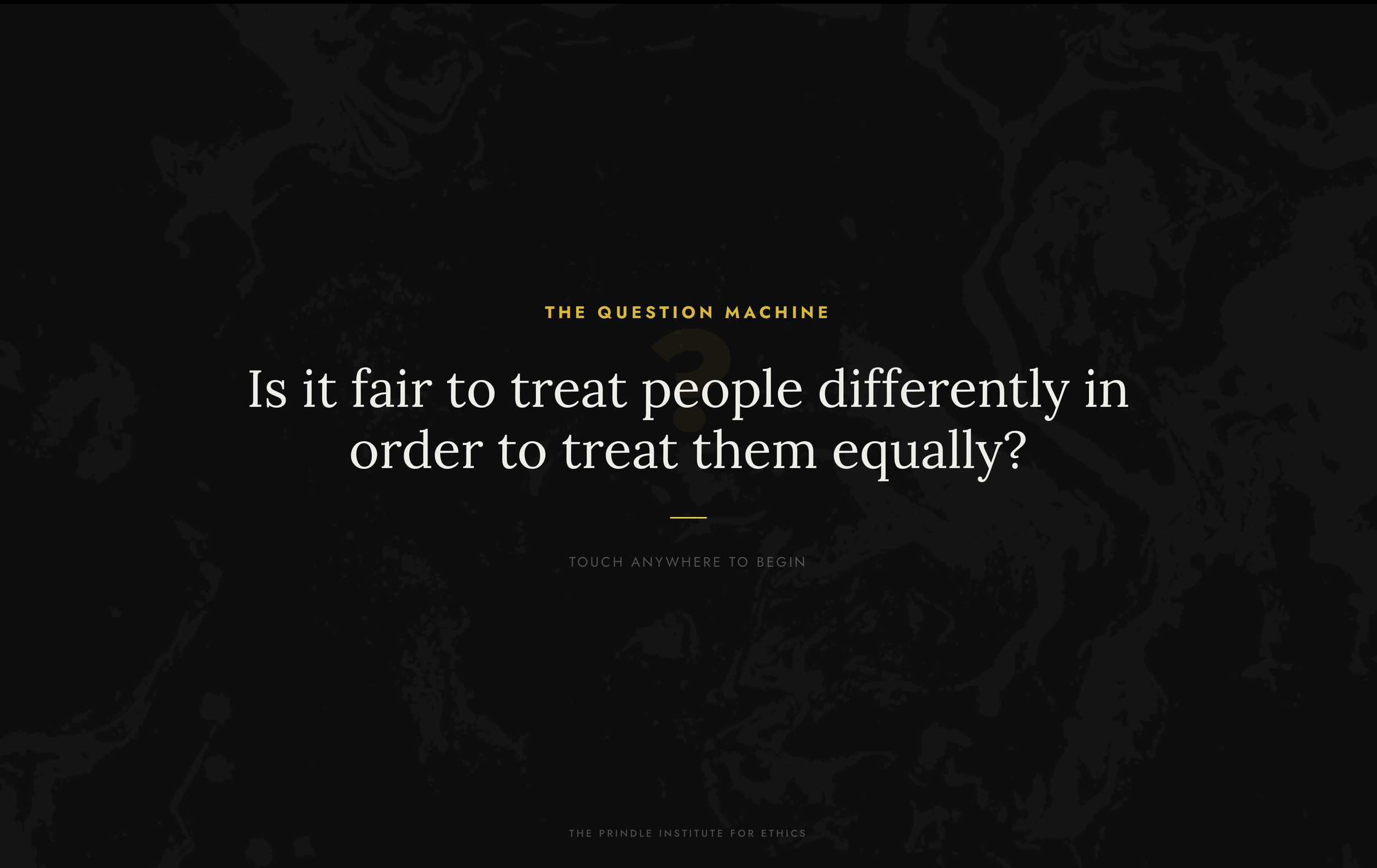
The Question Machine is a freestanding touchscreen kiosk designed for the Prindle Institute for Ethics, installed in a library setting where it serves middle and high school students, university visitors, and the general public. The project grew from a straightforward question: what would it look like to bring Philosophy for Children-style inquiry out of the classroom and into a shared public space, with no facilitator, no account, and no prior familiarity with ethics required? The experience is built around a rotating set of philosophical questions drawn from accessible and evergreen themes including fairness, identity, truth-telling, courage, and democratic participation. Each question is grounded in a brief concrete anchor scenario that gives visitors something specific to think with. Visitors choose how to respond: in a short written reflection, by positioning themselves on a labeled spectrum, or by selecting between two philosophical framings of the question. A follow-up prompt pushes the inquiry one level further, and an anonymized display of previous responses lets visitors see the range of perspectives without any being ranked or marked correct.
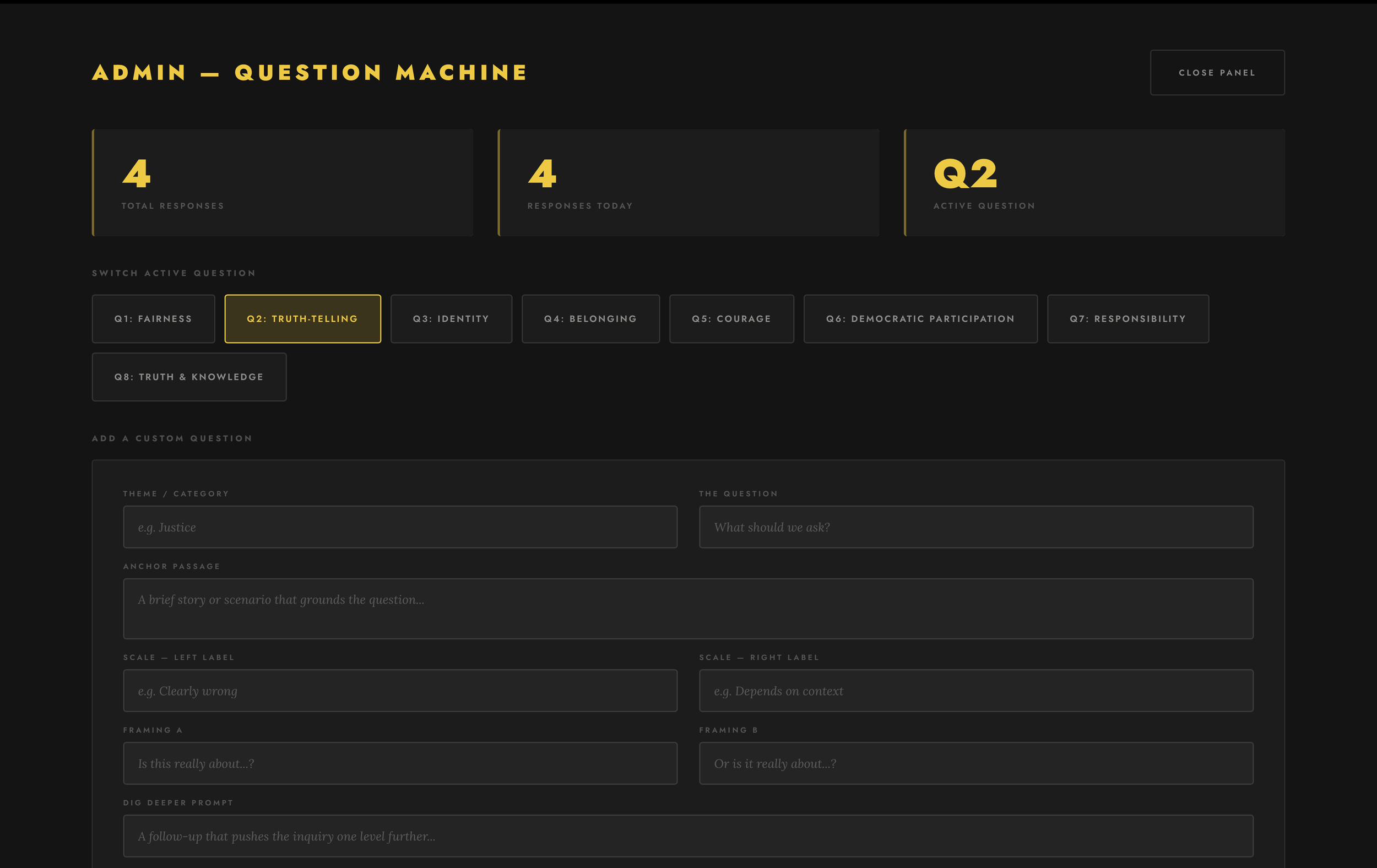
The interaction design prioritizes accessibility and pacing over efficiency, with generously sized touch targets, large type throughout, and a layout designed to feel more like a wall text than a form. On the technical side, the application is a single-file HTML document with no external runtime dependencies, built to run in a locked-down Chromium kiosk browser with all response data stored locally, keeping the system fully functional offline. A PIN-protected admin panel allows staff to switch the active question, add custom questions without touching code, and review aggregated response summaries from the touchscreen itself.
SYSTEMS DESIGN, INTERFACE DESIGN

A self-guided ethics inquiry experience with multiple response modes and aggregated community perspectives